oil paint
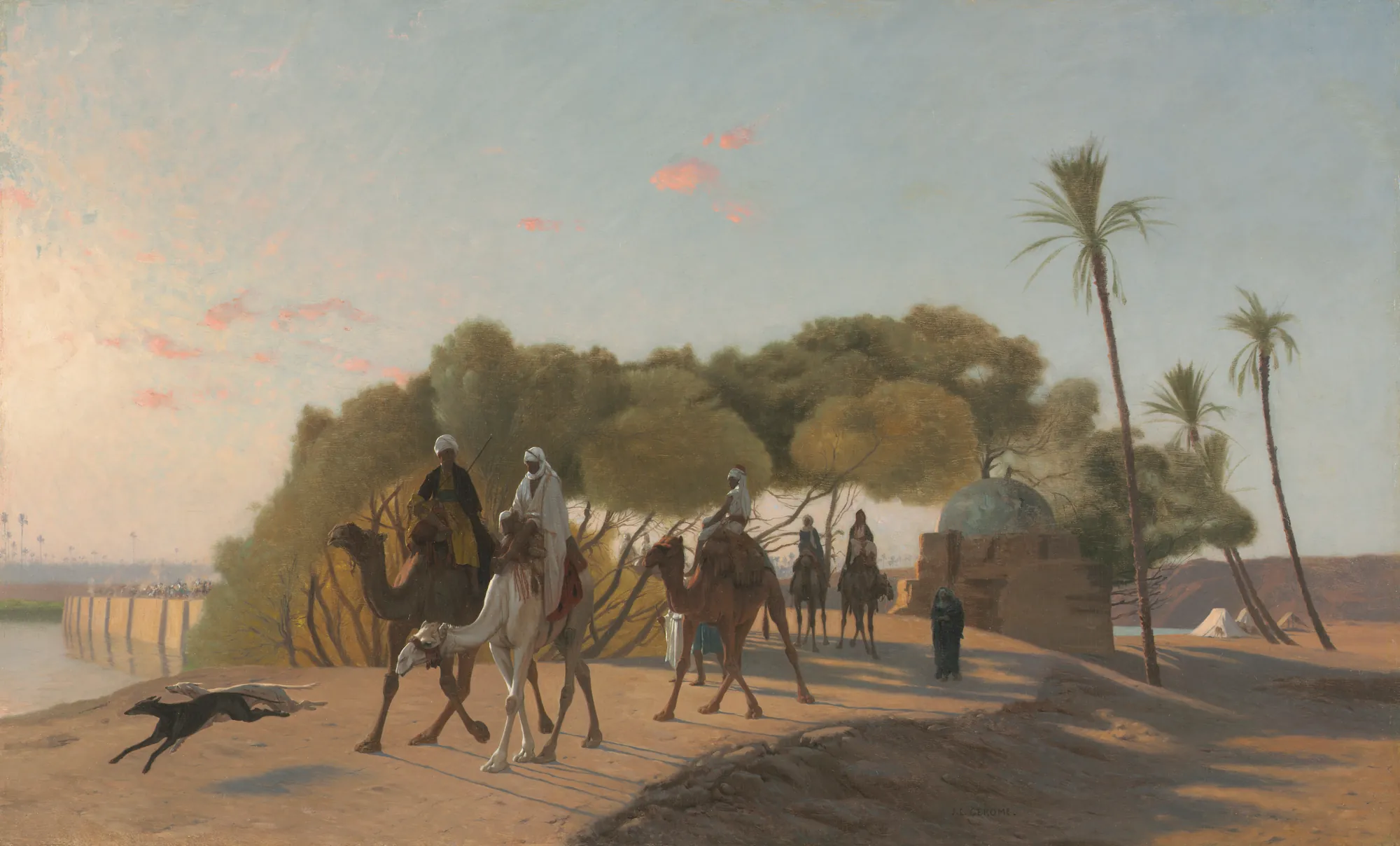
Leaving the Oasis
Jean-Léon Gérôme
A serene and meticulously detailed Academic painting capturing the quiet departure of a desert caravan at dawn.
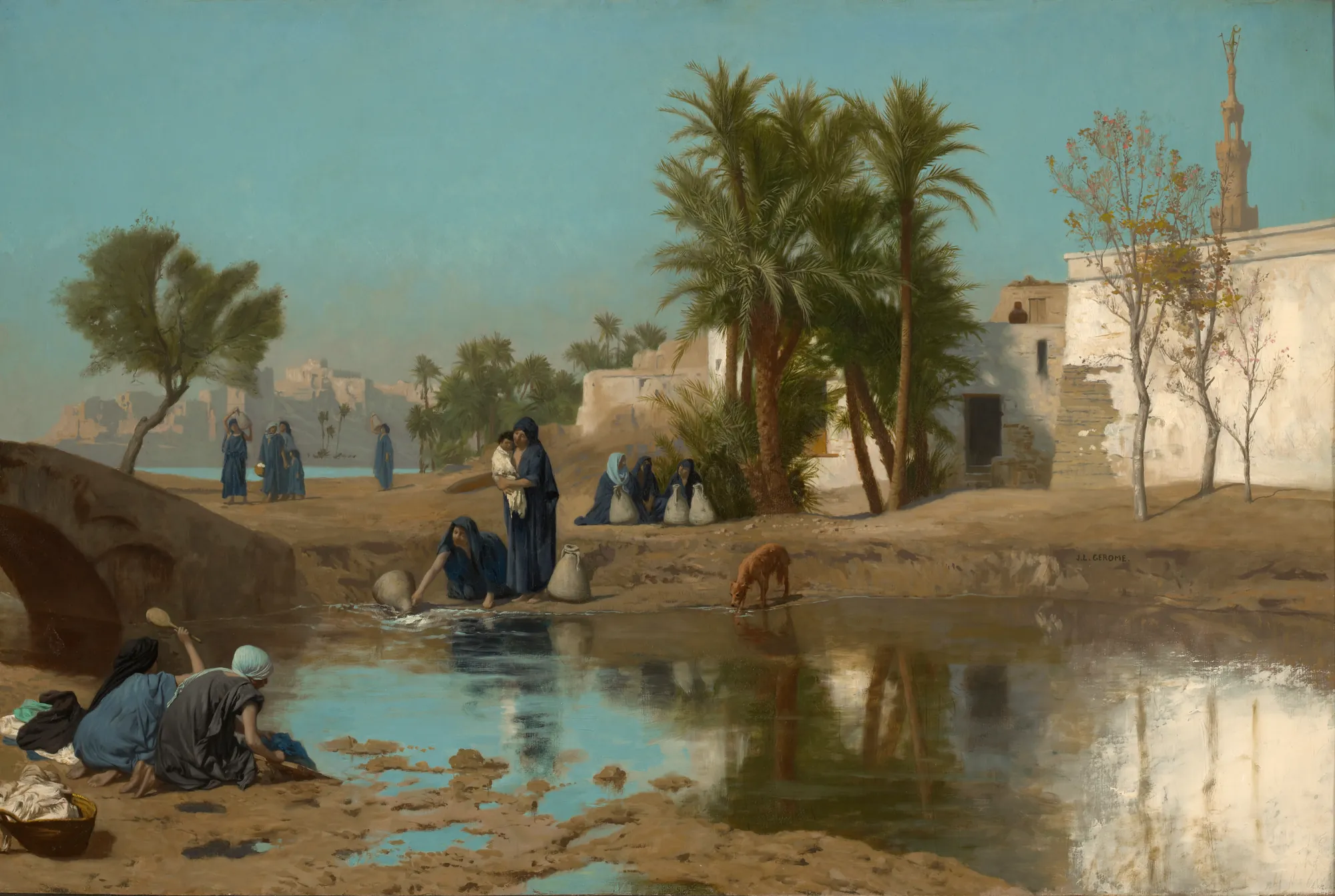
1874 · Oil Paint, Canvas
A serene and masterfully detailed Orientalist scene capturing a tranquil daily ritual by the water's edge.
$260
For the selected configuration
From $129
4 frame sizes
Made to order in ~2 business days · Free U.S. standard shipping (typically 5–8 business days after dispatch)
Where it works
A quiet, grounding work with softened warm notes — adds structure to a more polished room.
About the piece
Painted in 1874 by the French master Jean-Léon Gérôme, this work exemplifies the luminous precision of the Orientalist movement. It depicts Egyptian fellah women engaged in the daily task of drawing water, set against a backdrop of swaying palms and sun-drenched architecture. The reflective surface of the water and the hazy, atmospheric light create a sense of profound stillness and timelessness.
More like this
Contains nudity
Figure Studies
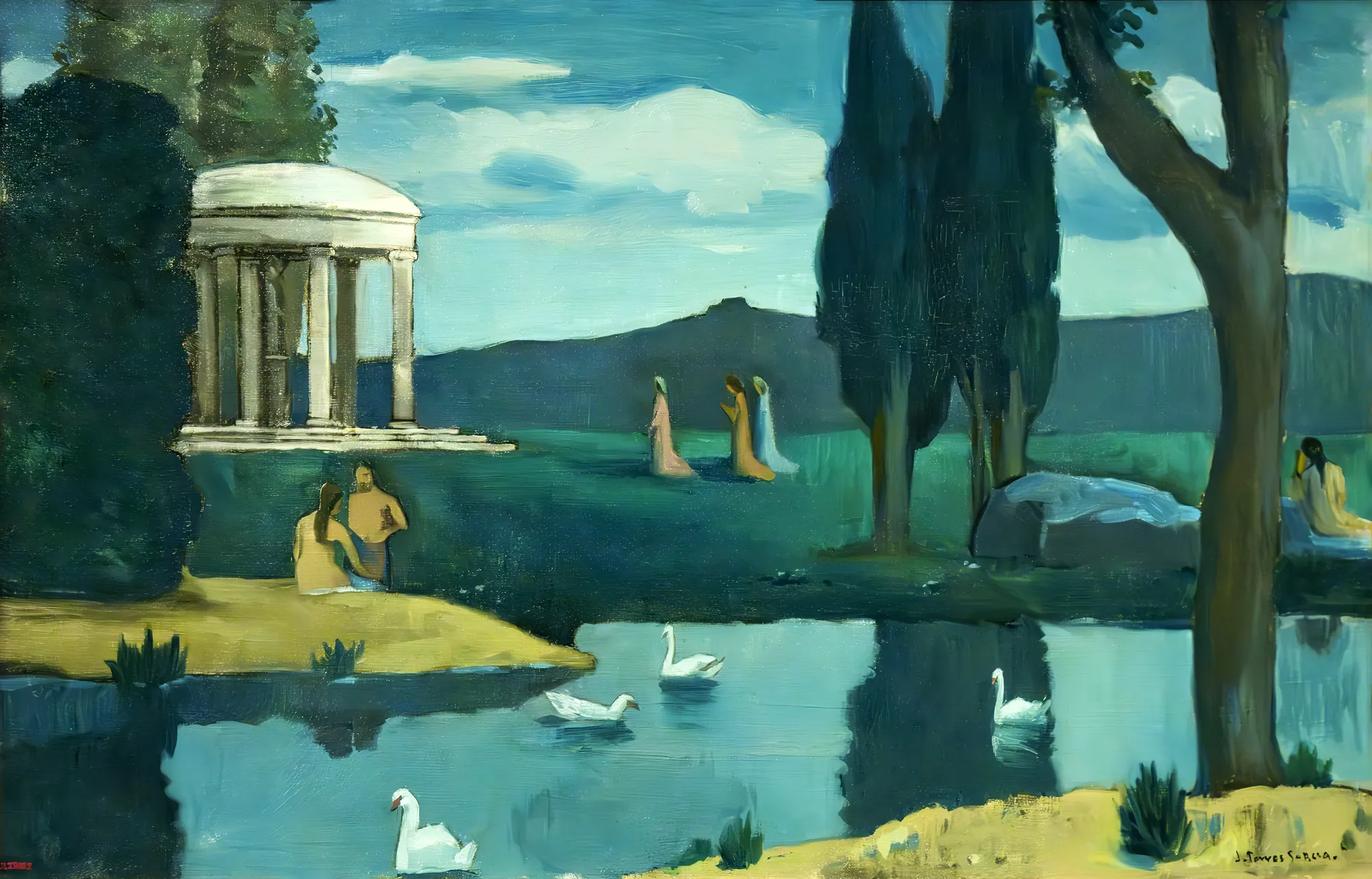
Joaquín Torres-García
A tranquil modernist scene of classical figures and swans beside a temple, rendered in a soothing palette of blues and greens.
Contains nudity
Figure Studies
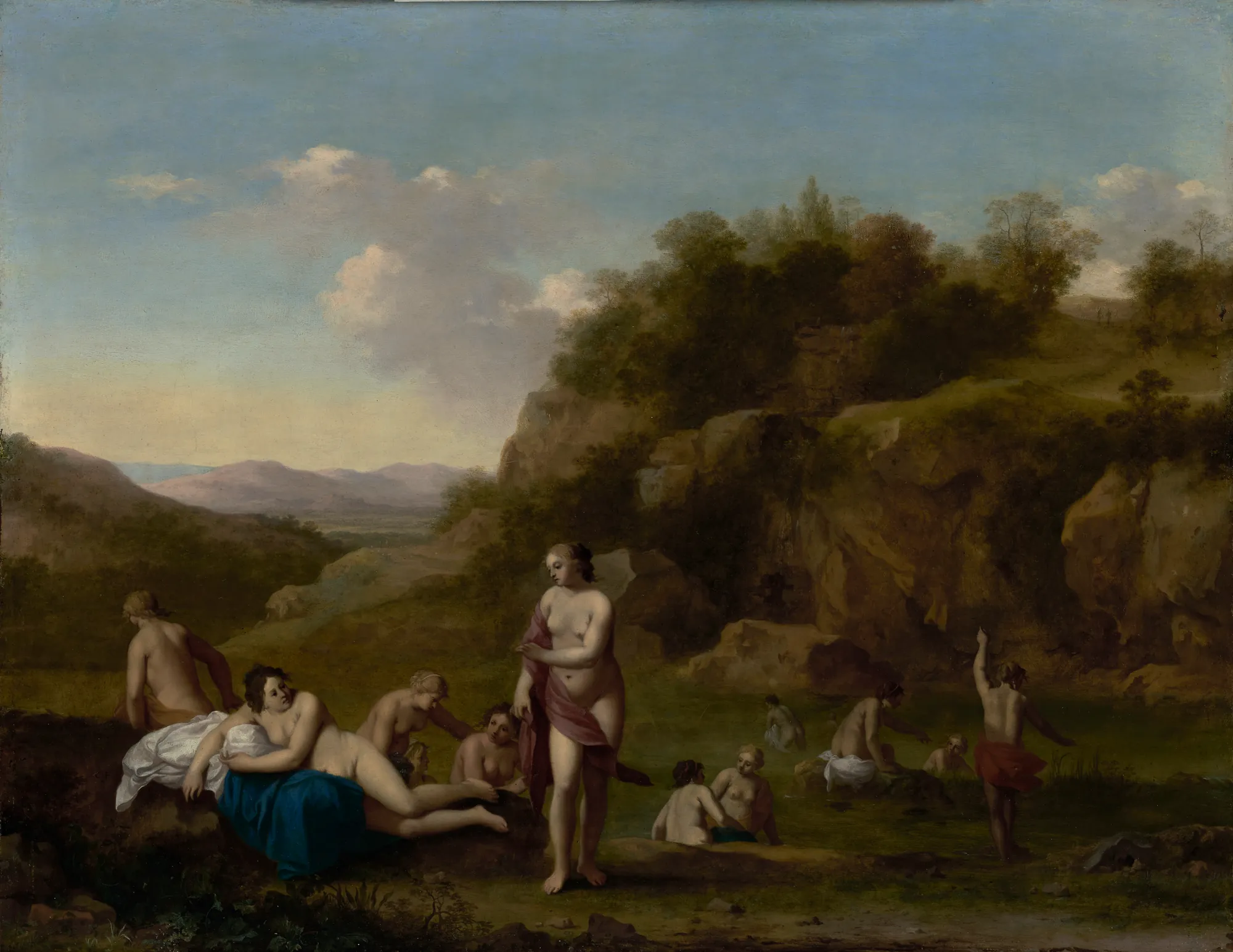
Cornelius van Poelenburgh
An idyllic Italianate landscape featuring a group of bathers set against dramatic rocky terrain.
Contains nudity
Pastoral Scenes
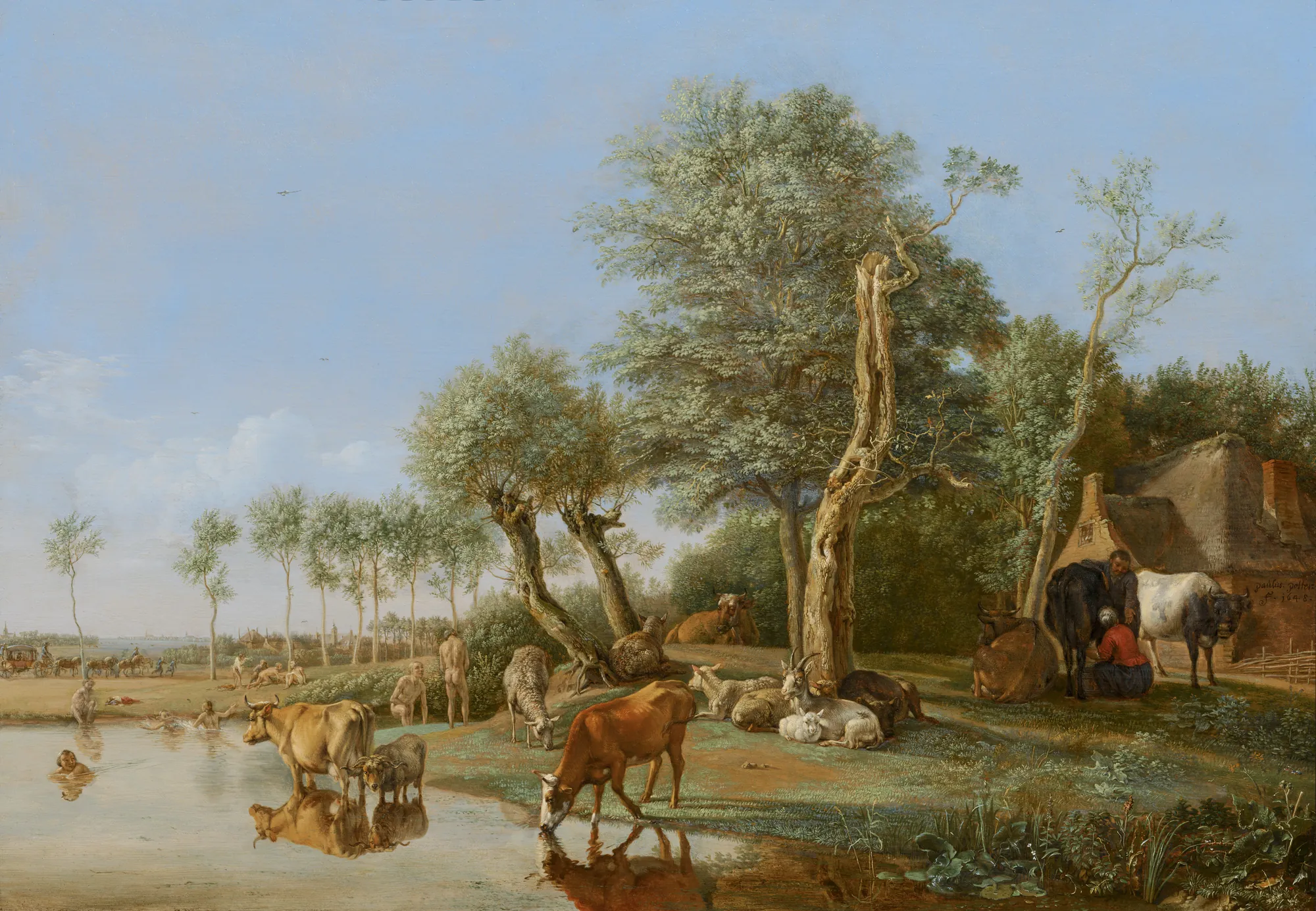
Paulus Potter
A serene Dutch Golden Age landscape capturing a quiet moment of livestock by a reflective pool.
Contains nudity
Figure Studies
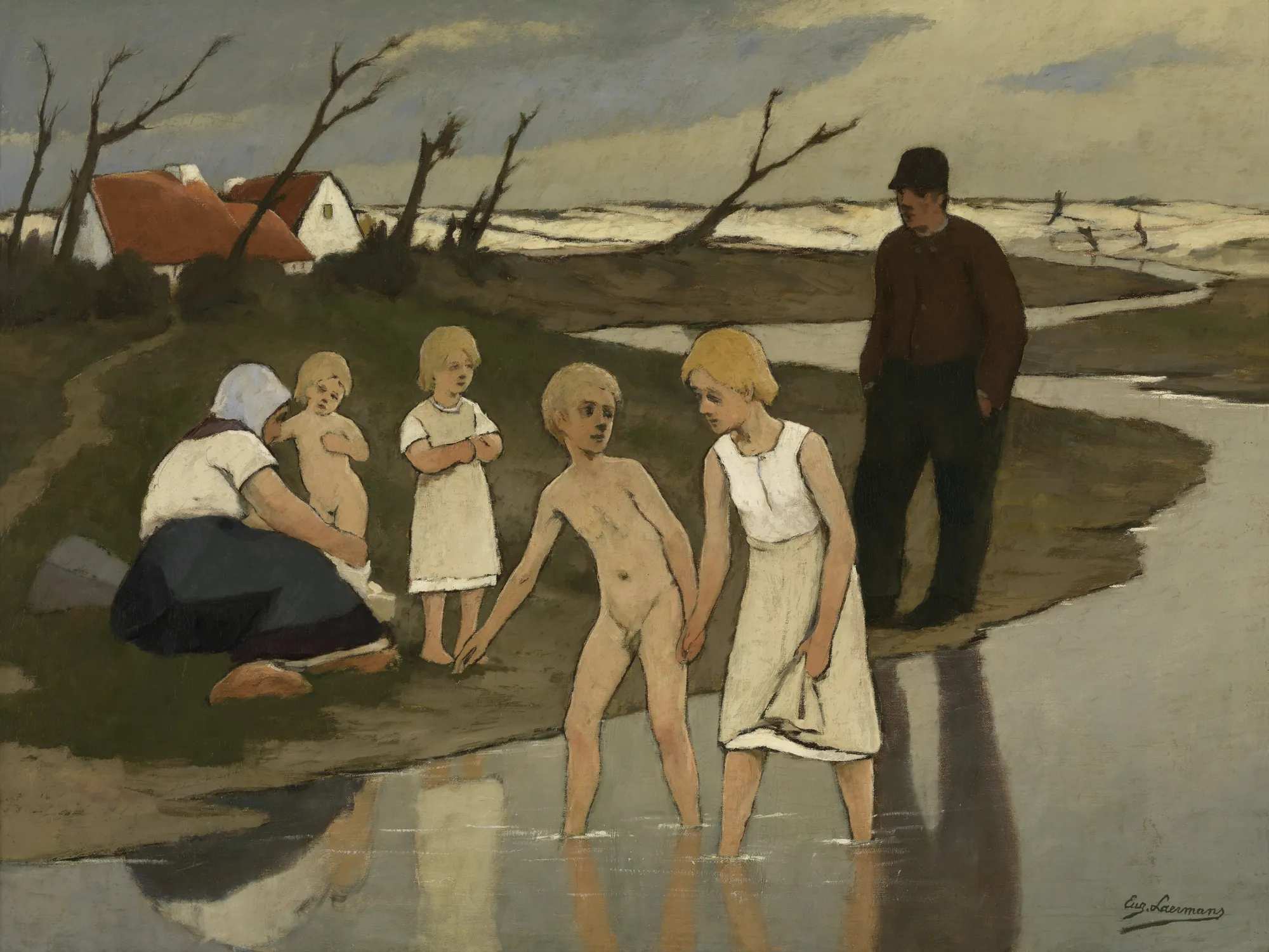
Eugène Laermans
A poignant social realist scene by Eugène Laermans, capturing a quiet moment of rural life in a moody, atmospheric landscape.
1874 · Oil Paint, Canvas
A serene and masterfully detailed Orientalist scene capturing a tranquil daily ritual by the water's edge.
$260
For the selected configuration
From $129
4 frame sizes
Made to order in ~2 business days · Free U.S. standard shipping (typically 5–8 business days after dispatch)
Where it works
A quiet, grounding work with softened warm notes — adds structure to a more polished room.