Contains disturbing content
oil paint
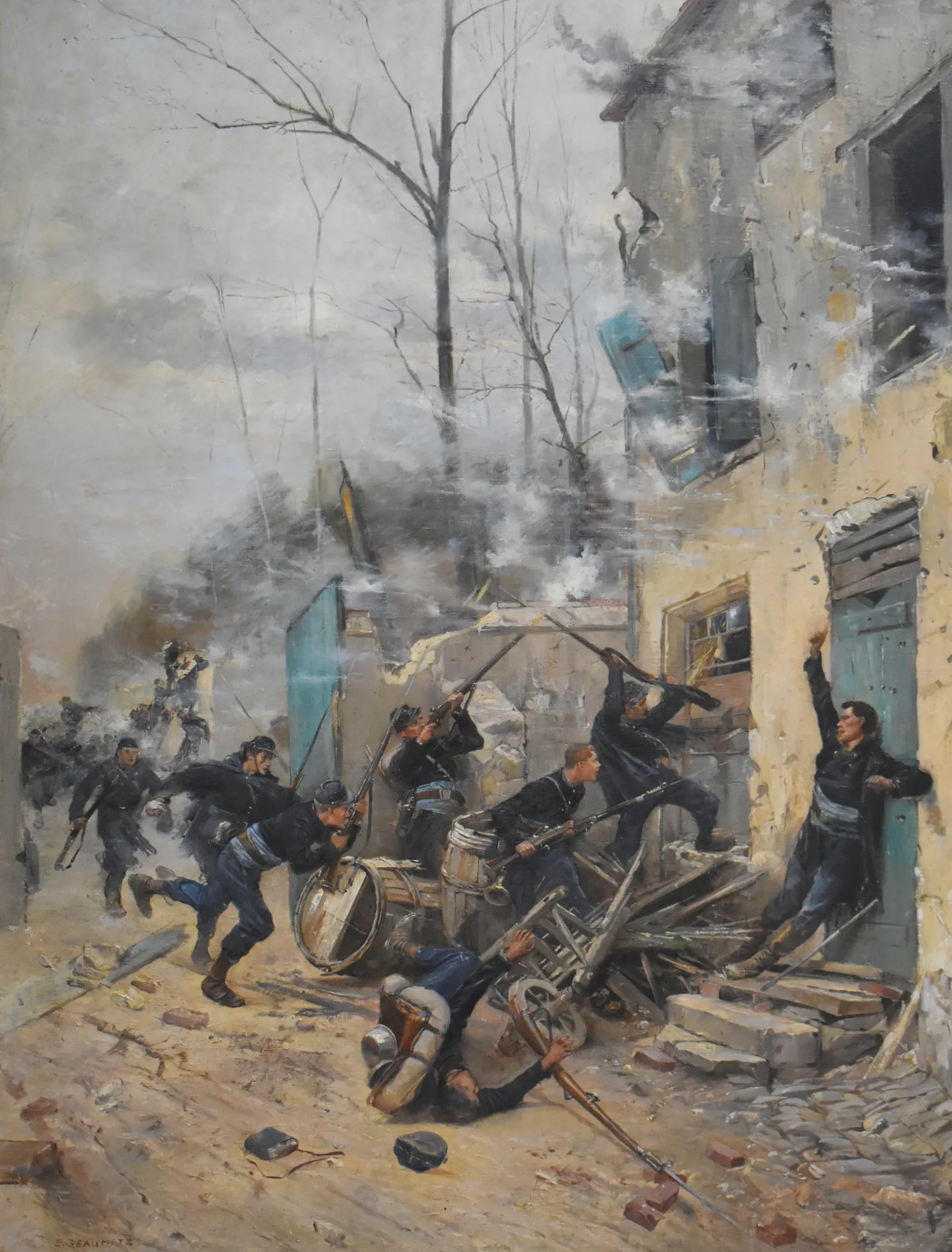
À la baïonnette
Henri-Charles-Etienne Dujardin-Beaumetz
A dramatic 19th-century military scene capturing the intensity of a bayonet charge through a war-torn street.
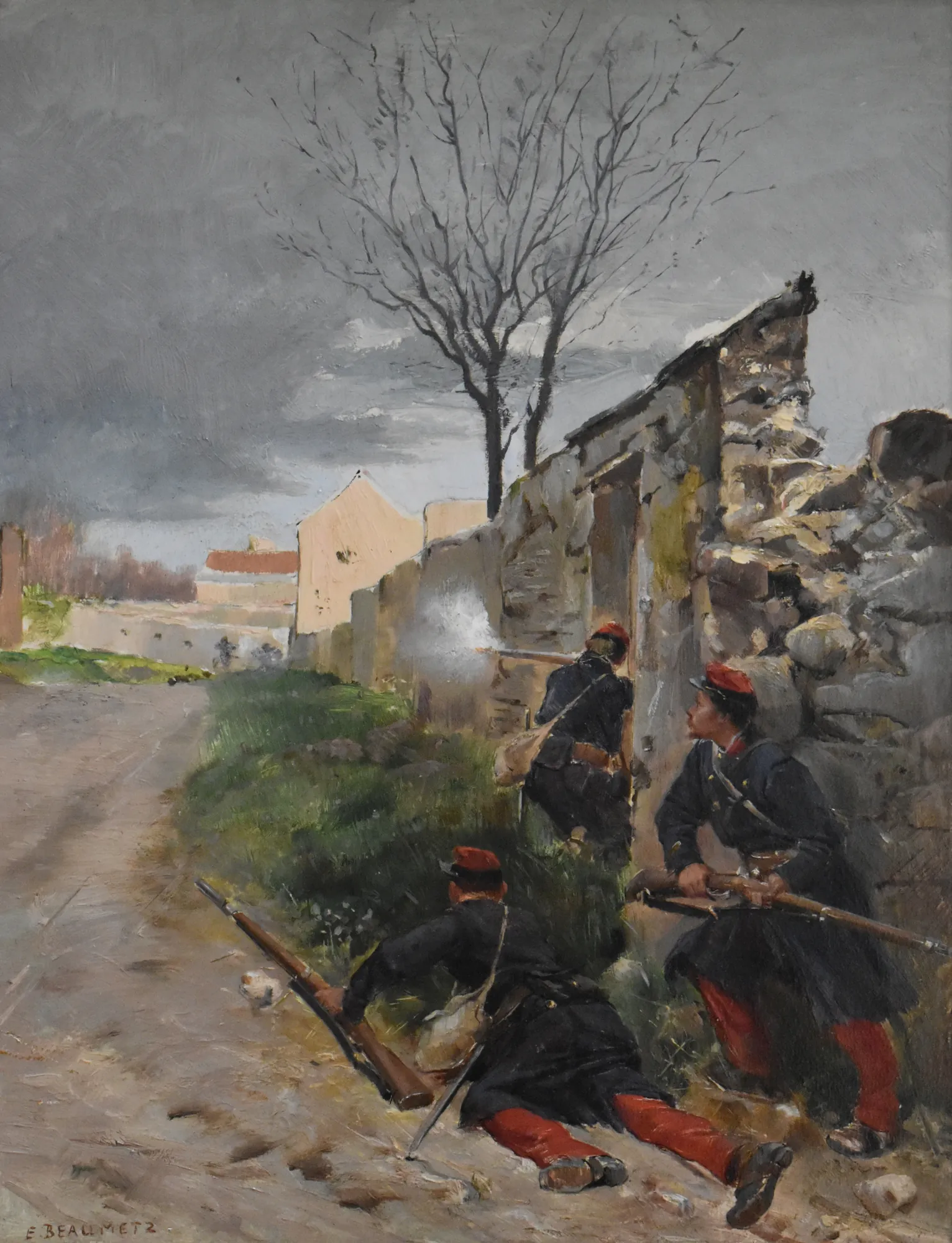
1900 · Oil Paint, Panel
A dramatic and atmospheric military scene capturing a tense moment of combat amidst weathered ruins.
$129
For the selected configuration
From $129
1 frame size
Made to order in ~2 business days · Free U.S. standard shipping (typically 5–8 business days after dispatch)
Where it works
A bold work with active energy with softened warm notes — brings a composed sense of weight.
About the piece
Painted around 1900 by Henri-Charles-Etienne Dujardin-Beaumetz, this oil painting captures a tense moment of a French military ambush. The composition features soldiers in distinctive dark blue and red uniforms sheltered by weathered stone ruins, with a puff of rifle smoke marking the onset of conflict. Against a somber, overcast sky, the artist's masterful use of tone and atmosphere creates a powerful narrative of historical drama.
More like this
Contains disturbing content
oil paint
Henri-Charles-Etienne Dujardin-Beaumetz
A dramatic 19th-century military scene capturing the intensity of a bayonet charge through a war-torn street.
Contains disturbing content
Equestrian & Animals
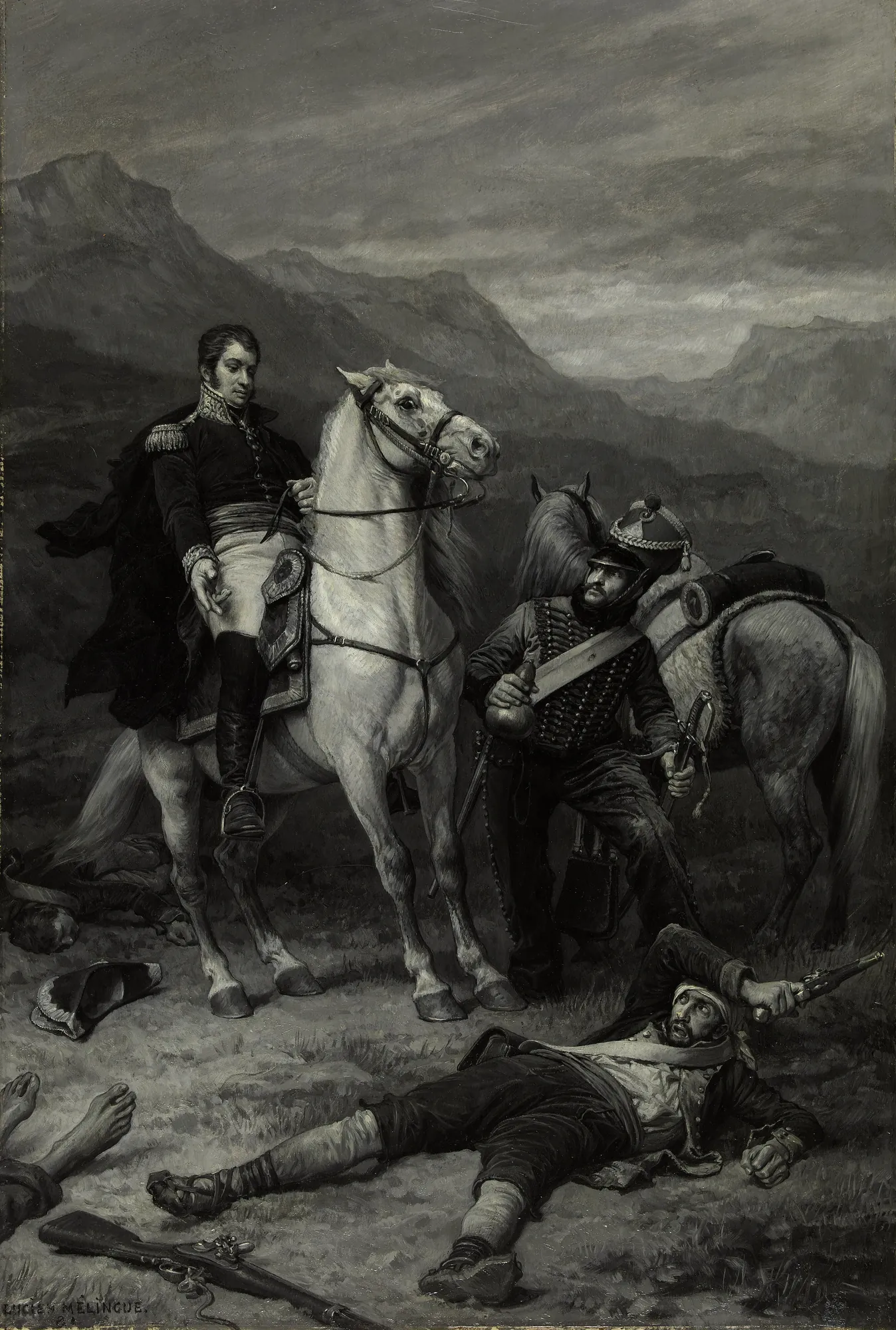
Lucien-Étienne Mélingue
A dramatic 19th-century grisaille painting depicting the somber aftermath of a military engagement.
Contains disturbing content
Curated selection
Hippolyte Lecomte
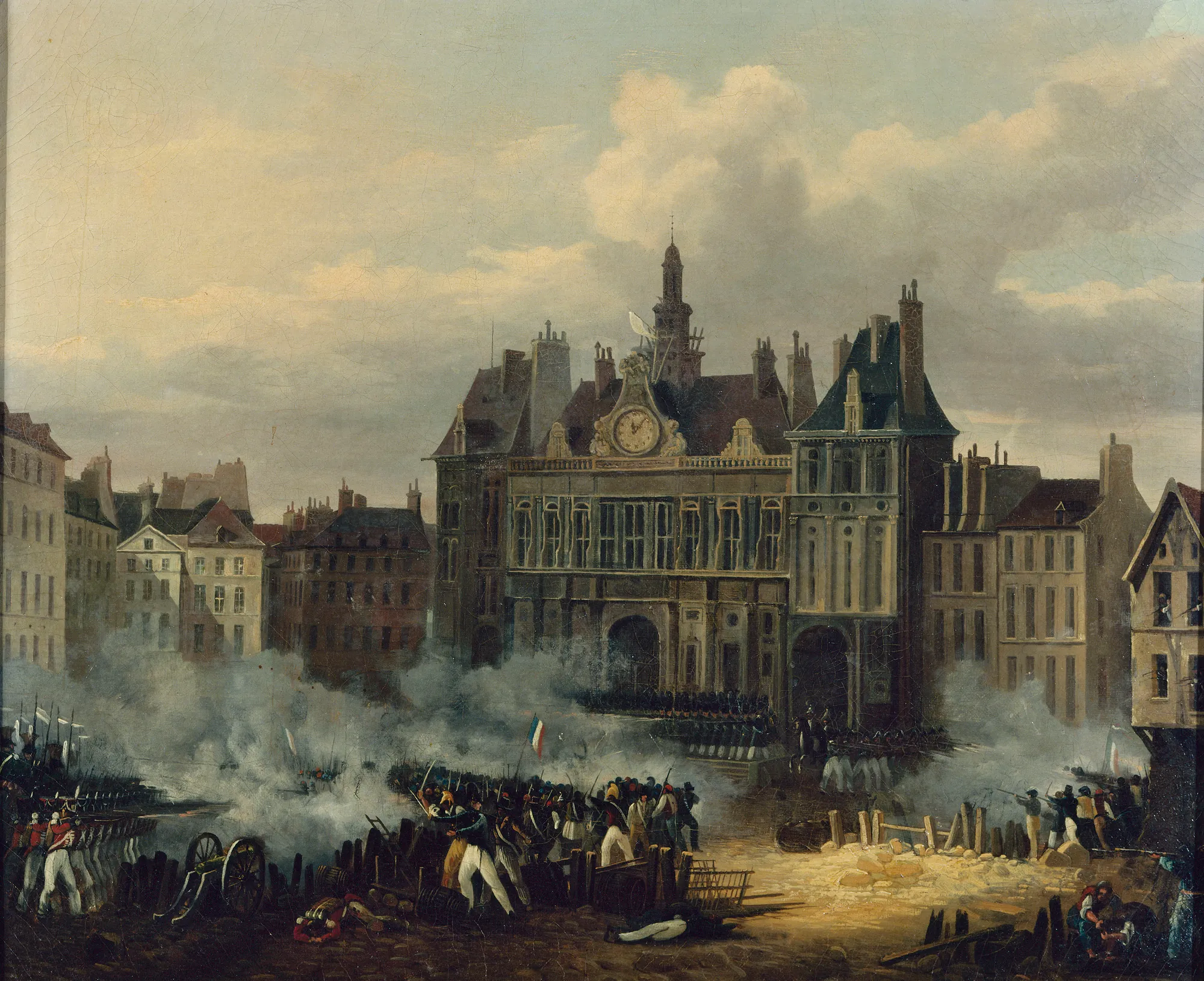
A dramatic portrayal of the 1830 July Revolution's assault on the Paris City Hall by Hippolyte Lecomte.
1900 · Oil Paint, Panel
A dramatic and atmospheric military scene capturing a tense moment of combat amidst weathered ruins.
$129
For the selected configuration
From $129
1 frame size
Made to order in ~2 business days · Free U.S. standard shipping (typically 5–8 business days after dispatch)
Where it works
A bold work with active energy with softened warm notes — brings a composed sense of weight.