Contains nudity
Old World Portraits
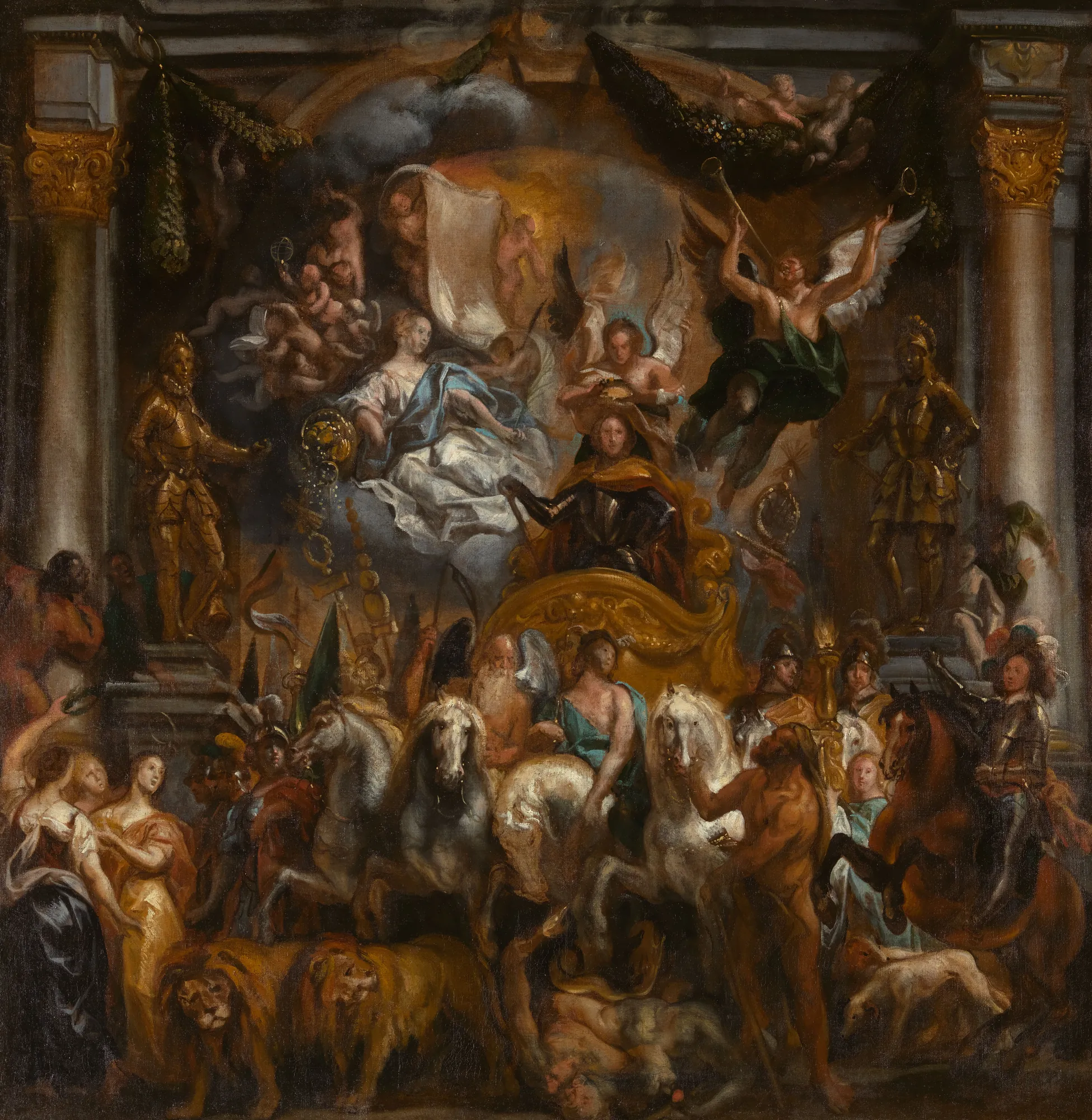
Triumph of Frederick Henry, Prince of Orange
Jacob Jordaens
A magnificent display of Baroque pageantry and allegorical power by Flemish master Jacob Jordaens.
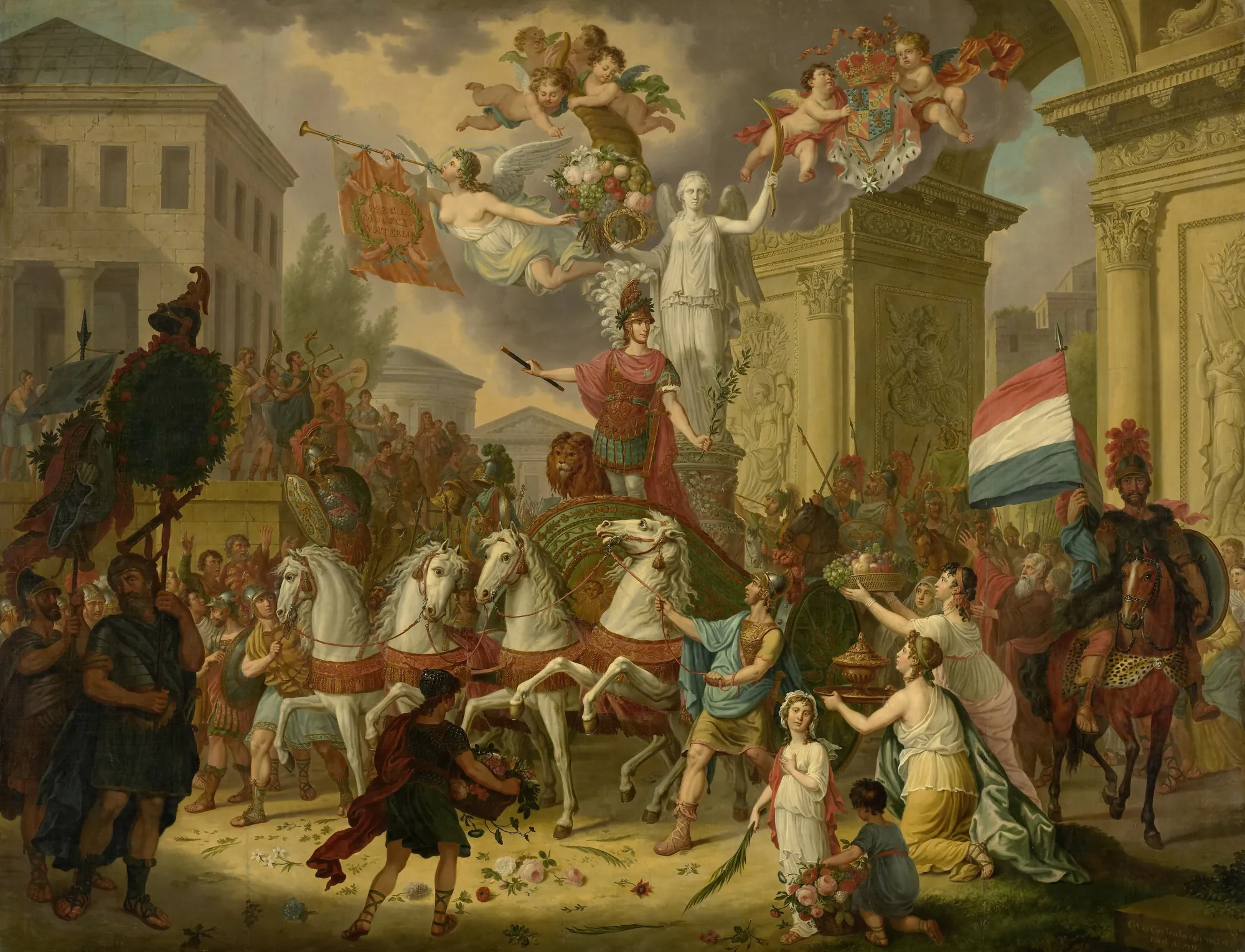
1815 · Oil Paint, Canvas
A magnificent neoclassical allegory celebrating military triumph through classical symbolism and grand-scale composition.
$129
For the selected configuration
From $129
2 frame sizes
Made to order in ~2 business days · Free U.S. standard shipping (typically 5–8 business days after dispatch)
Where it works
A bold work with active energy with rich warm-brown color — brings a composed sense of weight.
About the piece
Painted in 1815 by Cornelis van Cuylenburgh, this grand allegory depicts the Prince of Orange as a classical hero following his triumph at the Battle of Waterloo. Set amidst monumental architecture, the composition is rich with neoclassical symbolism, featuring a four-horse chariot, winged victories, and a retinue of soldiers and citizens celebrating the historical victory.
More like this
Contains nudity
Old World Portraits
Jacob Jordaens
A magnificent display of Baroque pageantry and allegorical power by Flemish master Jacob Jordaens.
Contains nudity
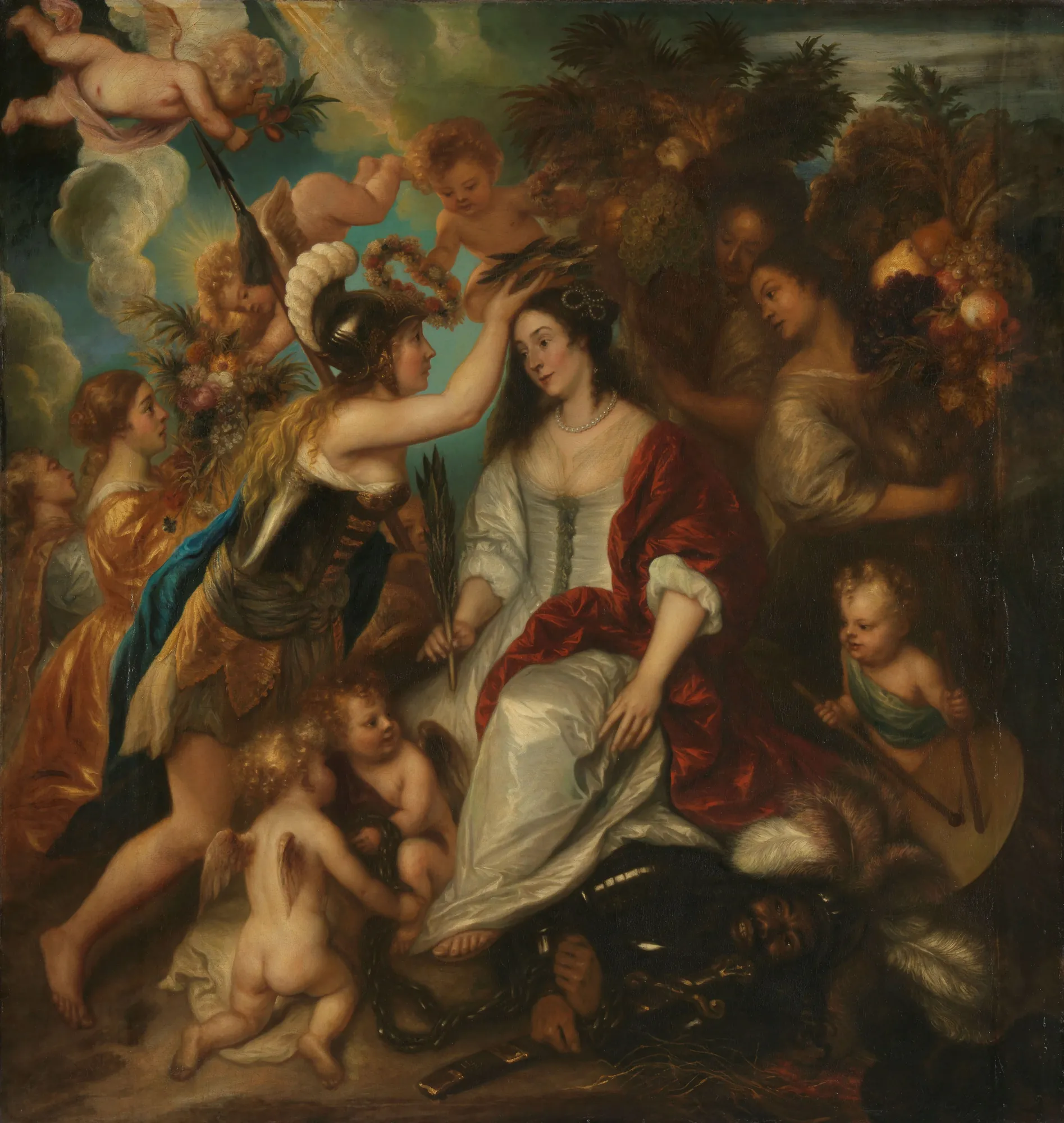
Figure Studies
Jan Lievens
A magnificent Dutch Golden Age allegory celebrating the triumph of peace through rich symbolism and dramatic Baroque composition.
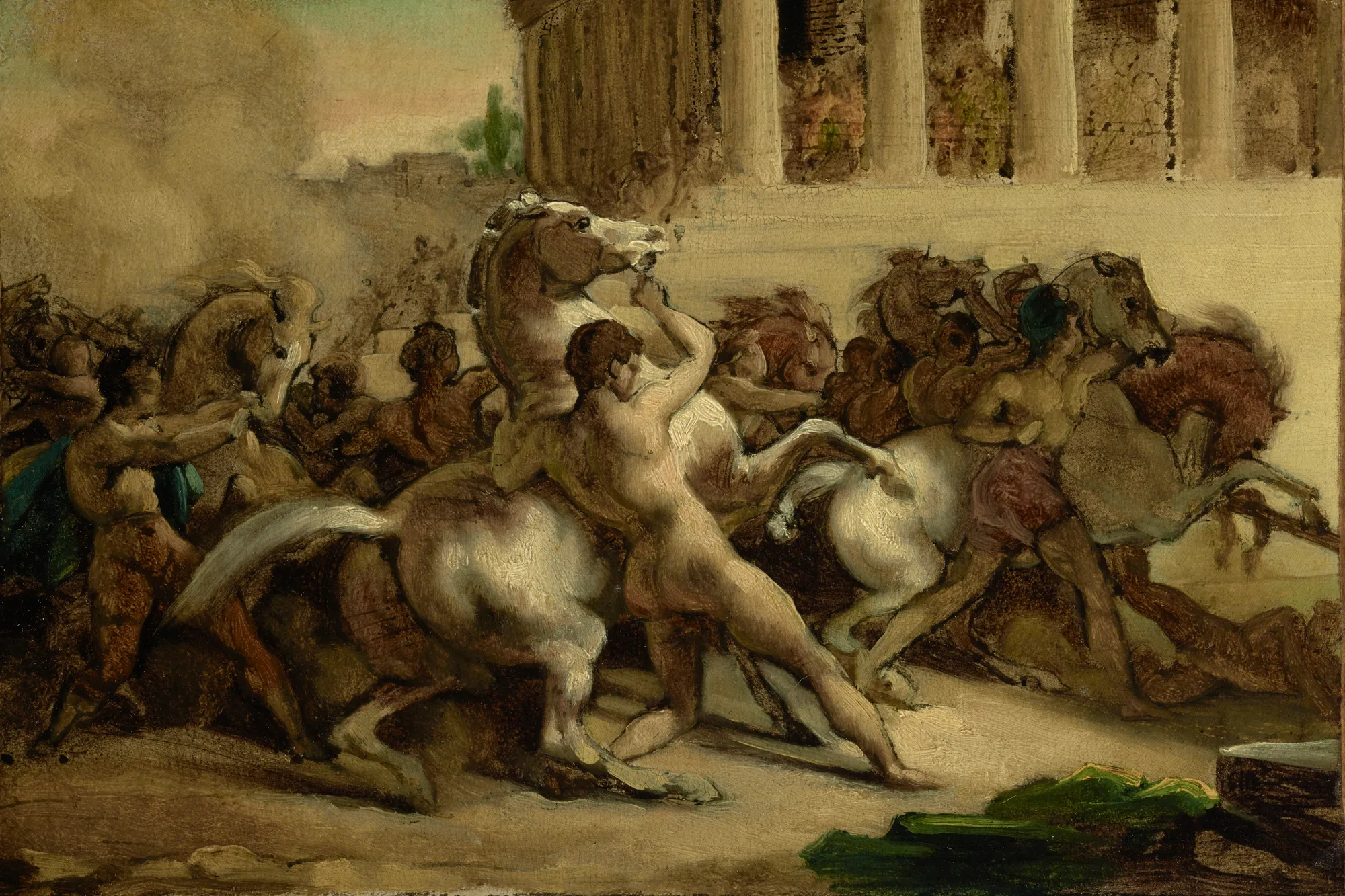
Contains nudity
Equestrian & Animals
Théodore Géricault
A dynamic Romantic-era study capturing the raw power and chaotic energy of horses and their handlers.
1815 · Oil Paint, Canvas
A magnificent neoclassical allegory celebrating military triumph through classical symbolism and grand-scale composition.
$129
For the selected configuration
From $129
2 frame sizes
Made to order in ~2 business days · Free U.S. standard shipping (typically 5–8 business days after dispatch)
Where it works
A bold work with active energy with rich warm-brown color — brings a composed sense of weight.